Wedding planning that doesn't feel like work
MyWeddingCoach
/2025
Context
I wanted to understand AI properly. Not the surface level, but what it takes to build a product around it. That curiosity led me and three former colleagues to start from zero: pick a problem, ship something real, and learn by doing.
We agreed early on that the project had to solve a genuine problem in a paying market, with AI built into the product itself. Wedding planning came up because the team had industry connections and firsthand experience with how painful the process is.
Problem
Wedding planning is project management. The risk was building something that feels like work.
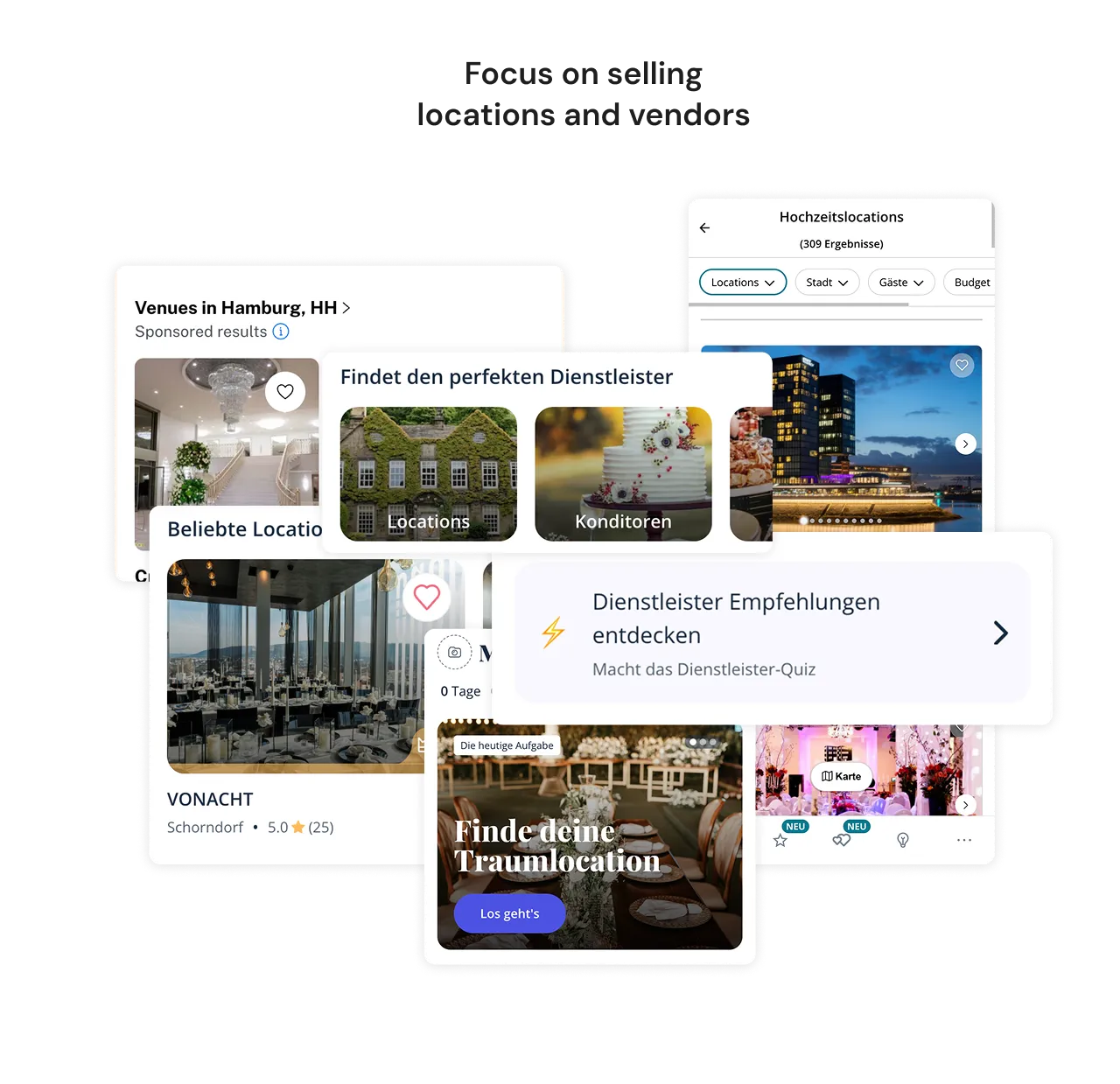
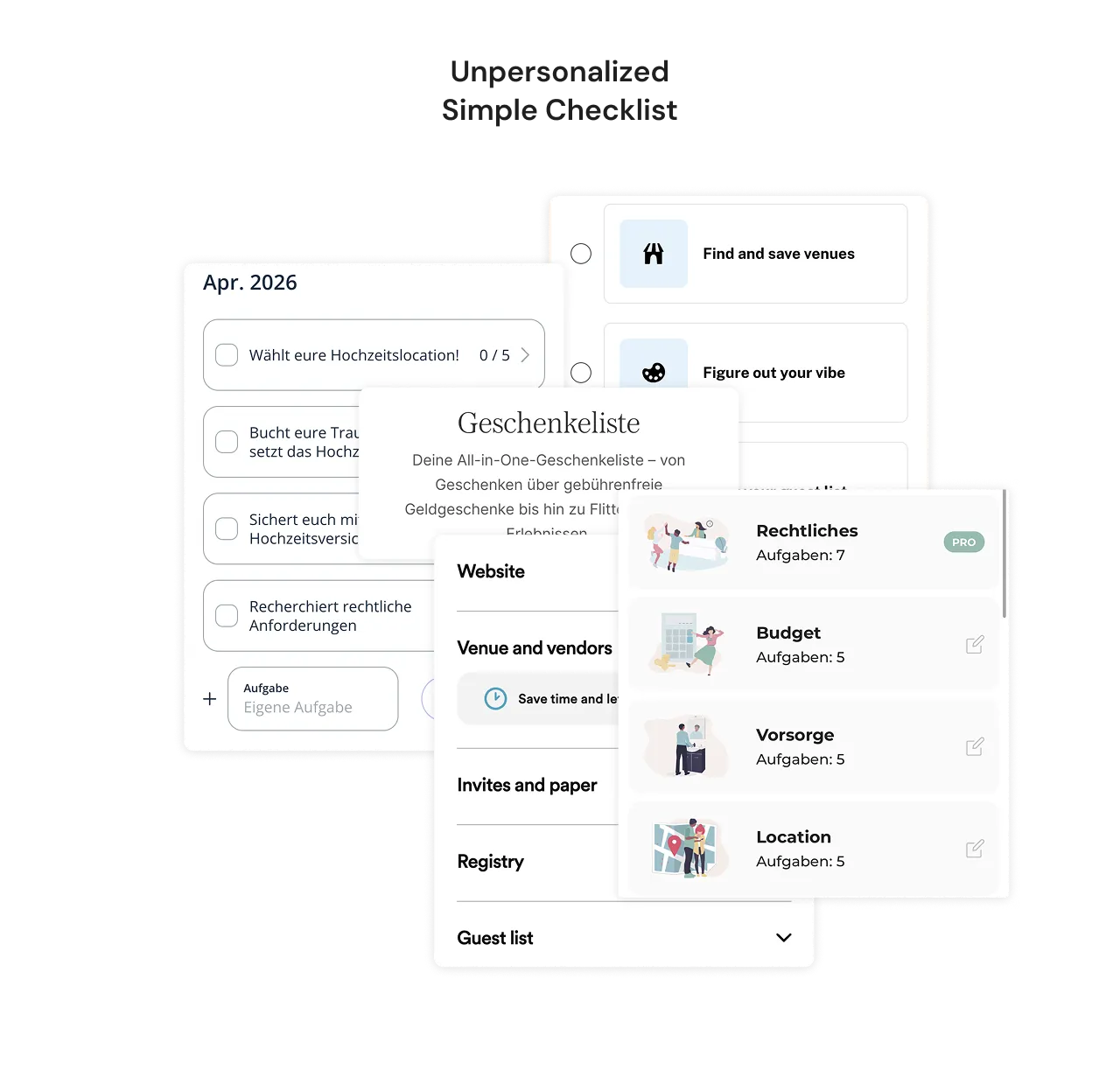
Most existing tools fall into one of two camps. Marketplace platforms have large vendor databases. They sell you a venue or a photographer. The actual planning is secondary. Budget is something you figure out after you've already been sold on a location. The other camp is single-function apps: a checklist here, a budget spreadsheet there, an RSVP tool somewhere else.
Neither approach connects budget, guests, tasks, and vendors into something that moves as one.
Visual direction
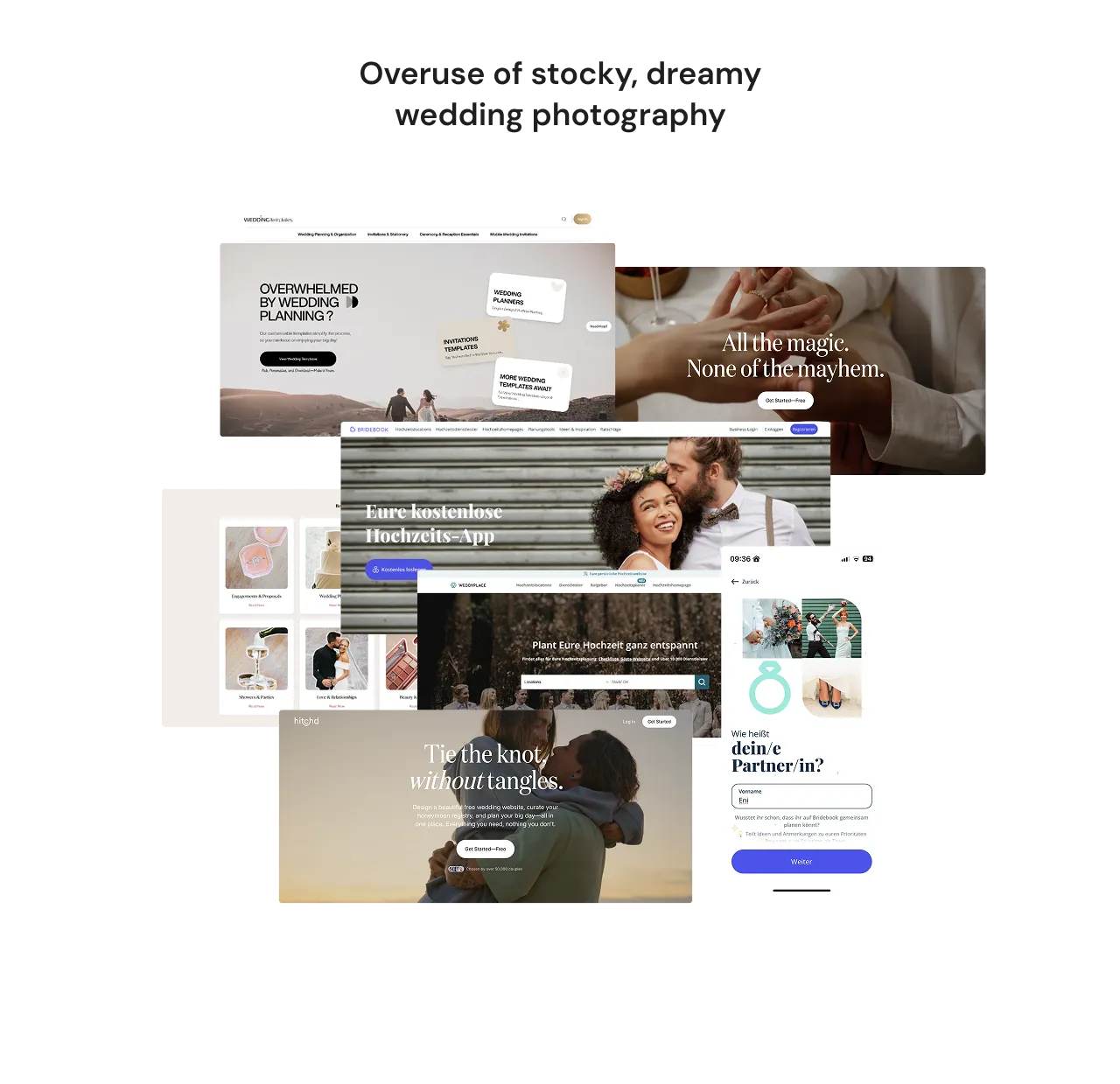
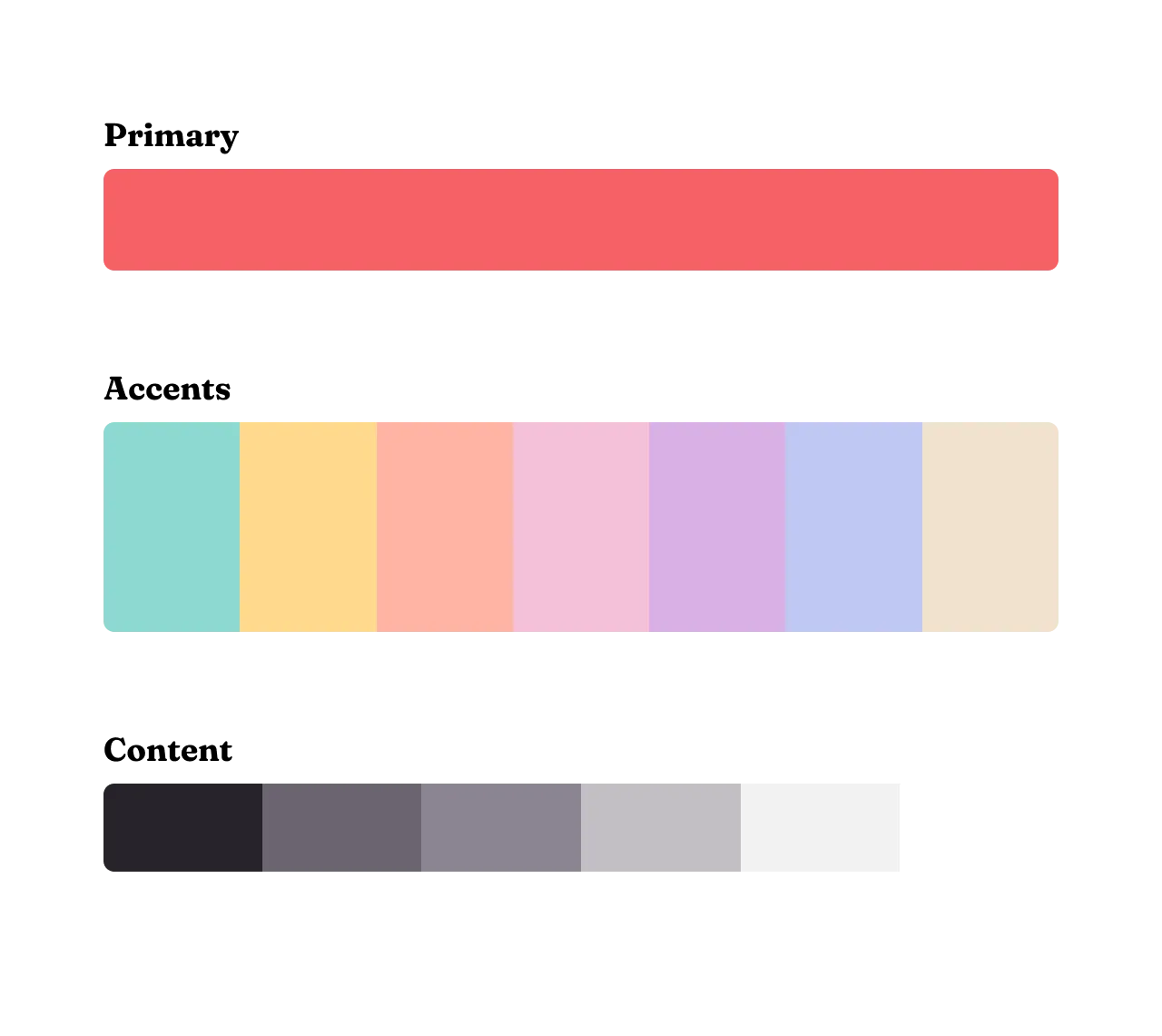
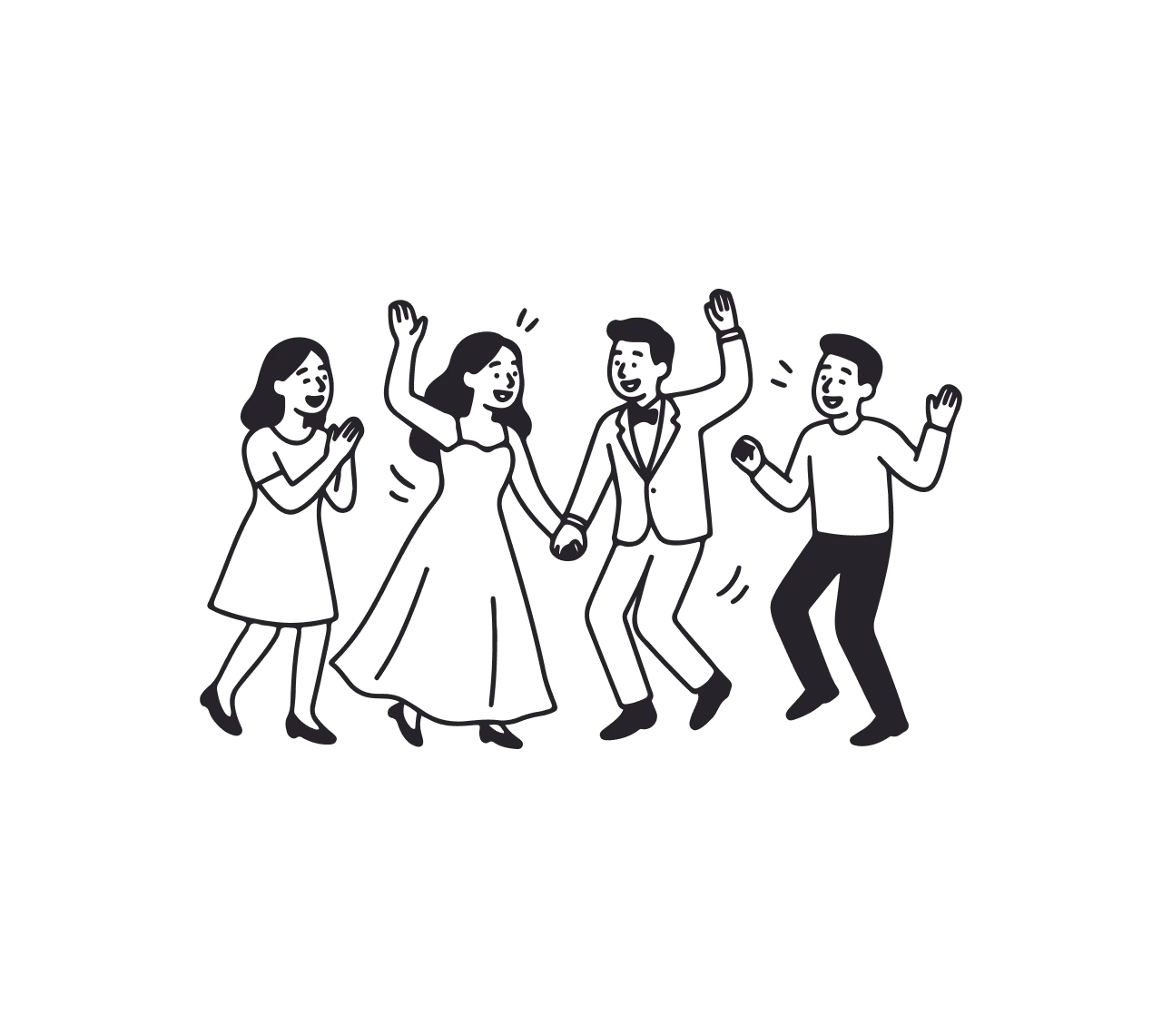
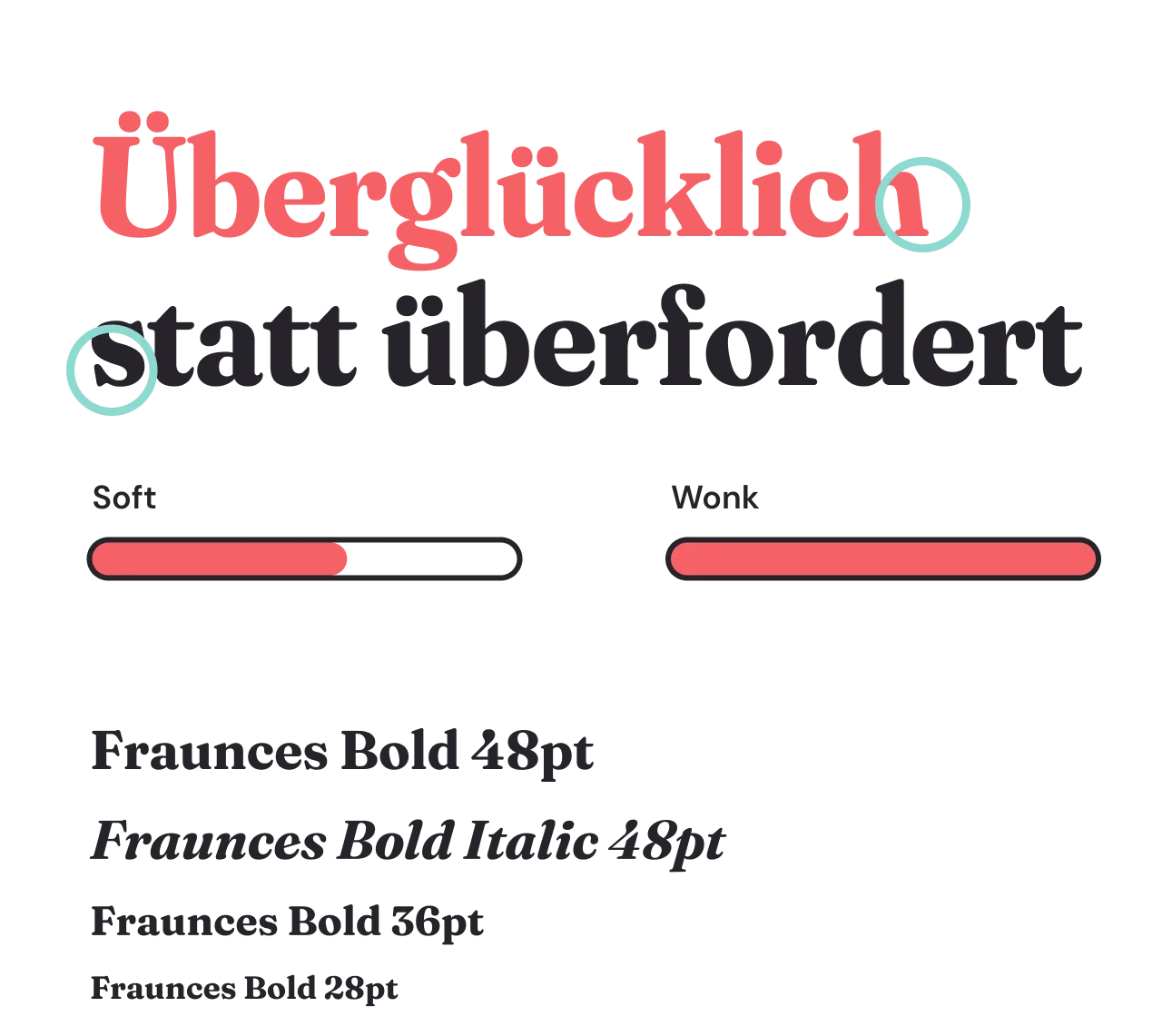
I pushed the brand in the opposite direction of the competition — saturated friendly colours, a bold and big serif combined with a low-contrast sans, monotone and playful illustrations, informal tone-of-voice.
It had to feel welcoming and modern. On eye level with the couples. A planning tool that doesn't look like one.
In contrast to overuse of the same emotional, sunset images I decided to go with clean simple and friendly illustrations – that might feel a bit childish, but playful.
The product
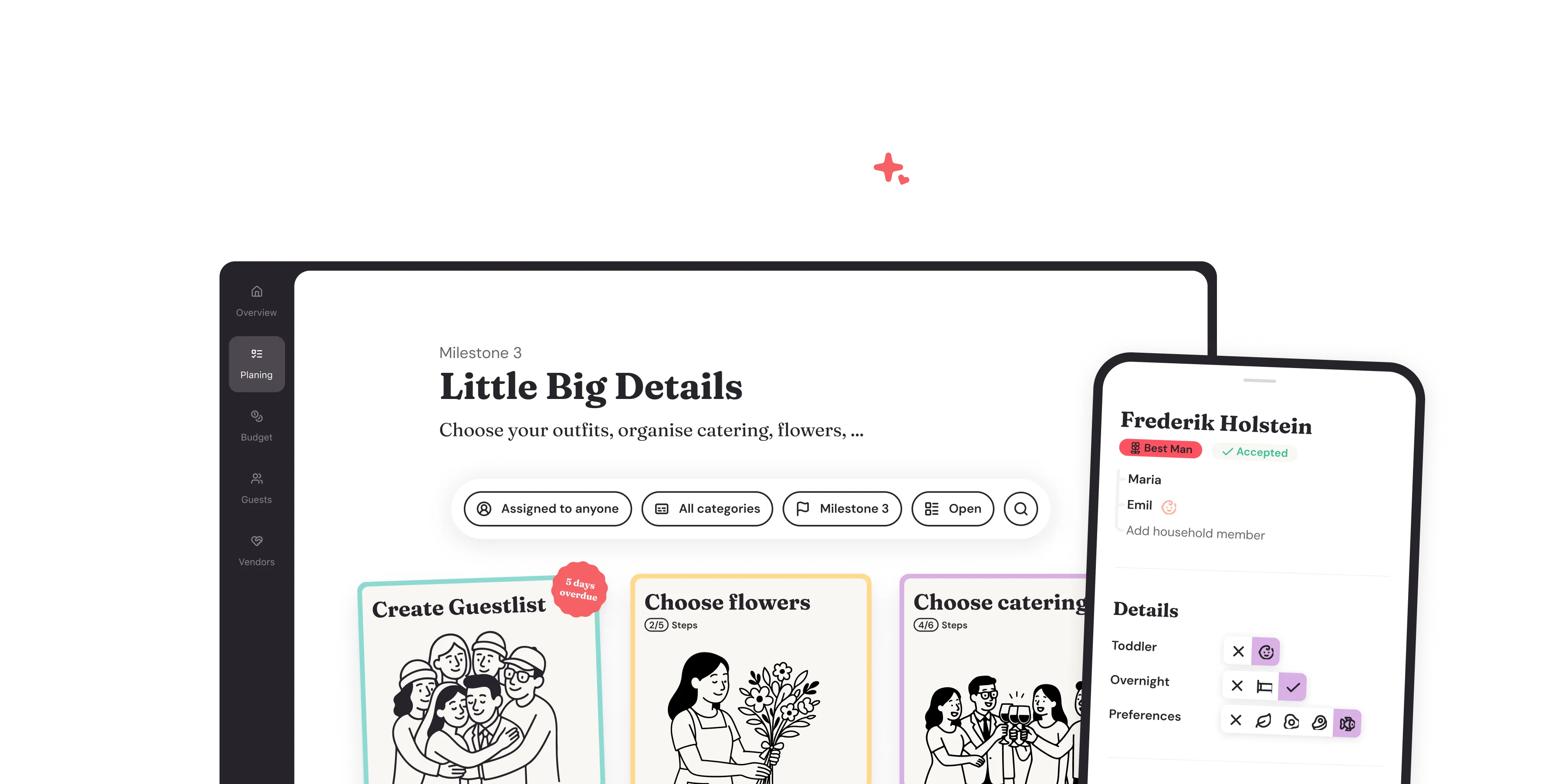
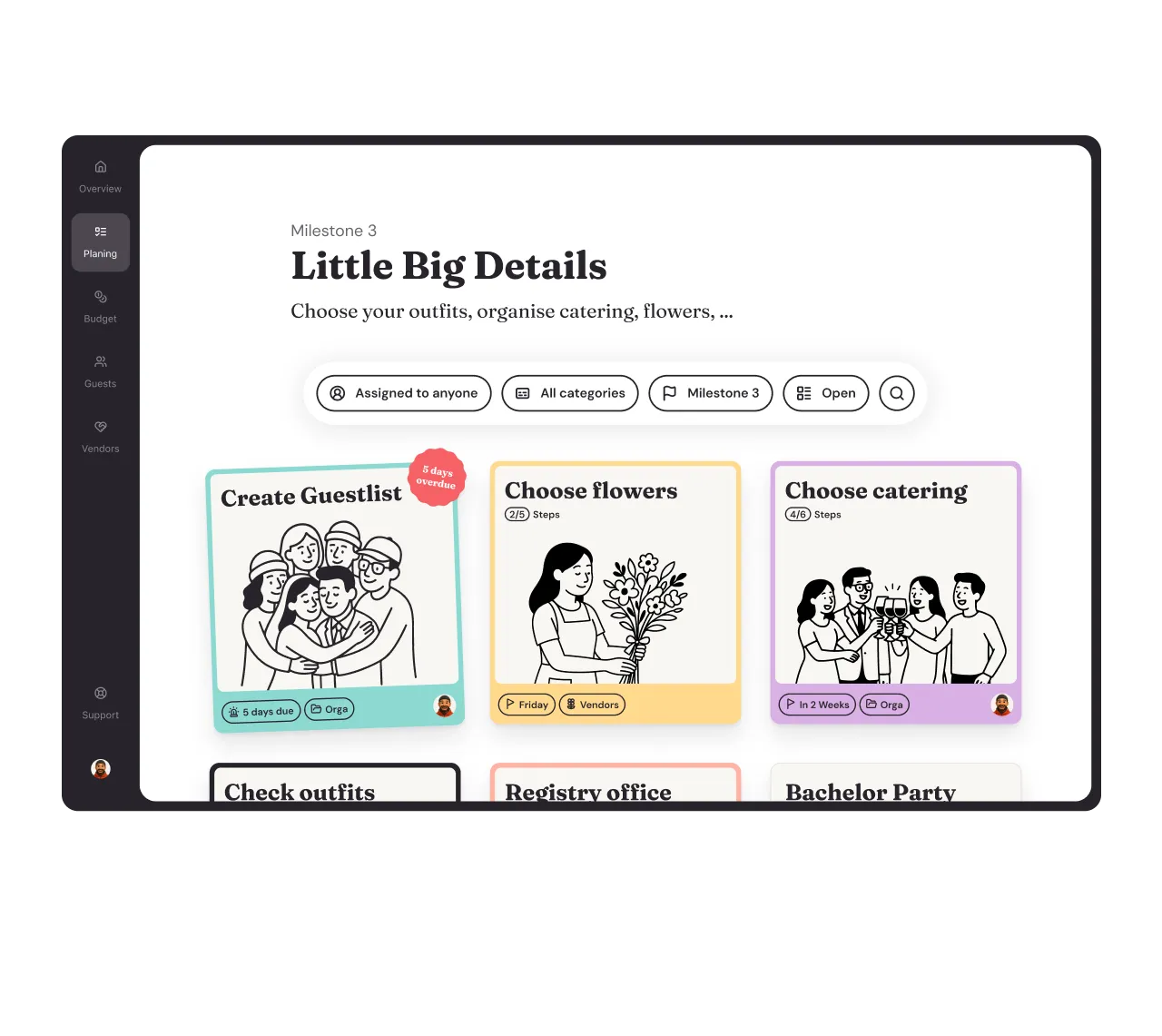
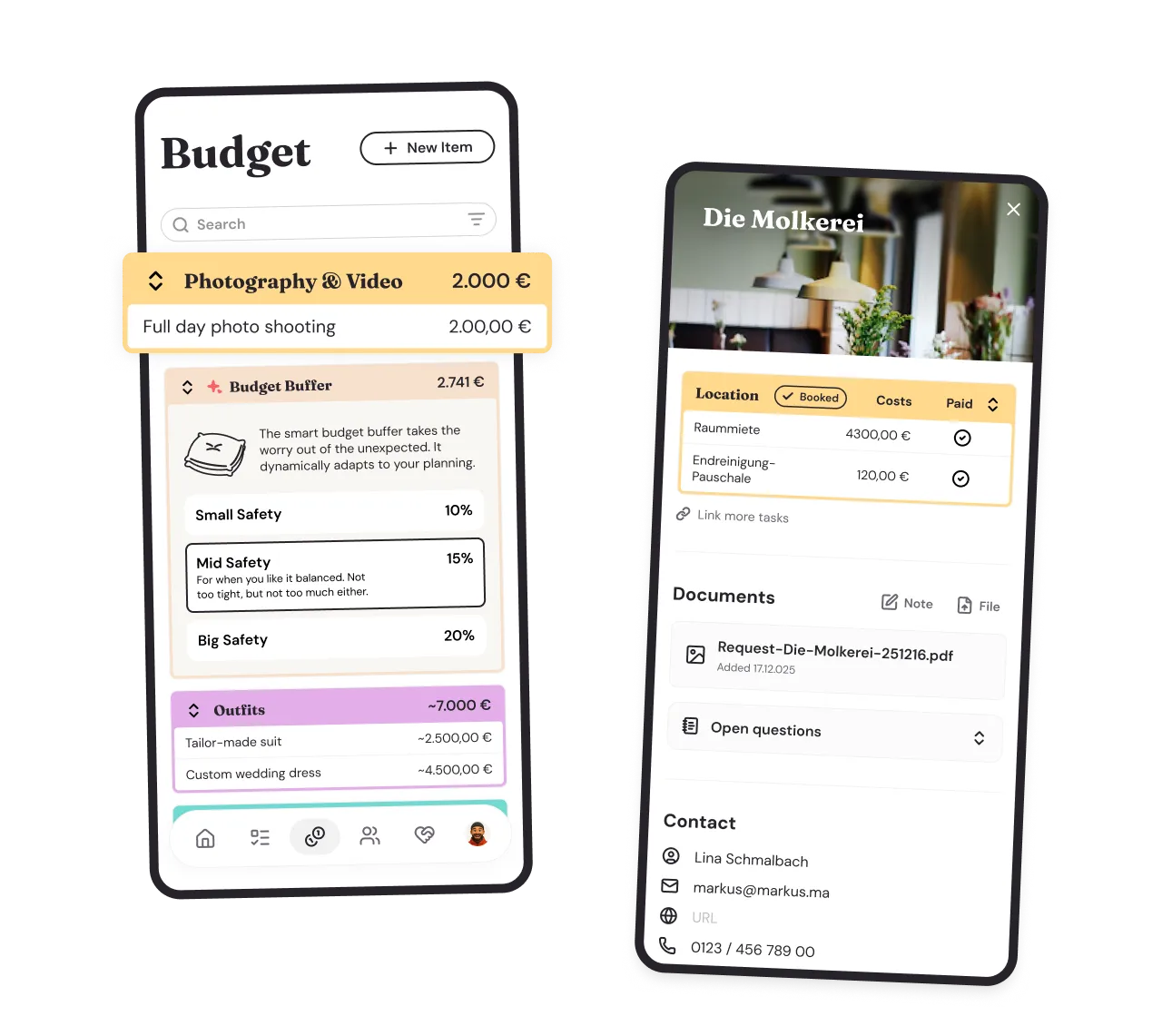
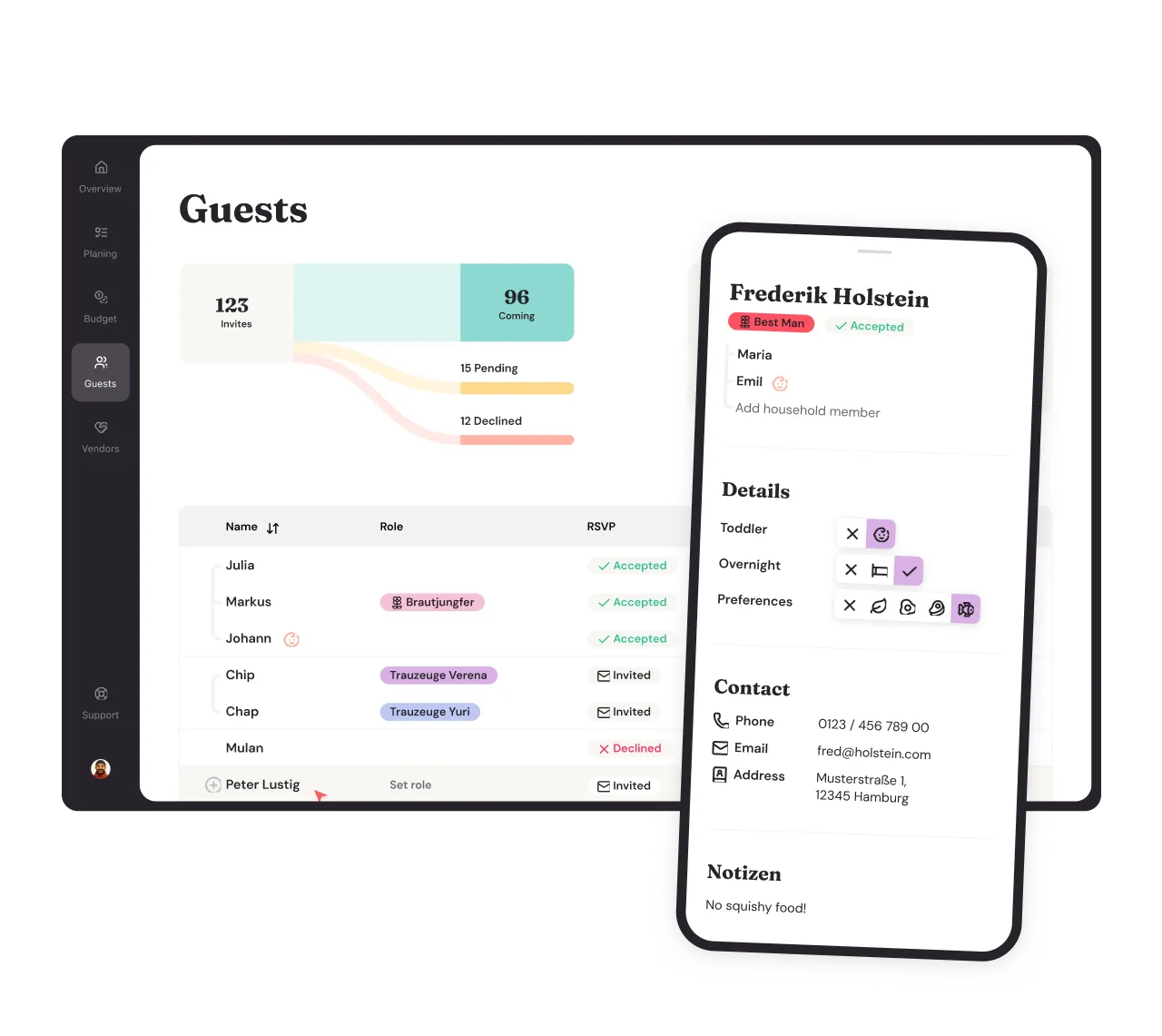
The information architecture was a collaborative effort. We worked through the structure together: what the four core sections should be, how data flows between them, what a couple sees first when they open the app.
We landed on four connected sections: planning, budget, guests, vendors. Change the guest count and the catering estimate adjusts. Book a vendor and the budget shifts from estimate to actual. Nothing exists in isolation. At any point a couple knows what to do next and what it will cost.
I designed the UI and the interaction patterns on top of that structure. How information is prioritised on the dashboard, how tasks surface based on what a couple said matters most to them, how the budget stays legible as line items shift from estimates to real costs.
The interviewer
The first version of the onboarding was a free-form AI chat. It didn't work. The AI couldn't reliably collect all the information we needed, and responses came back too long and inconsistent for onboarding.
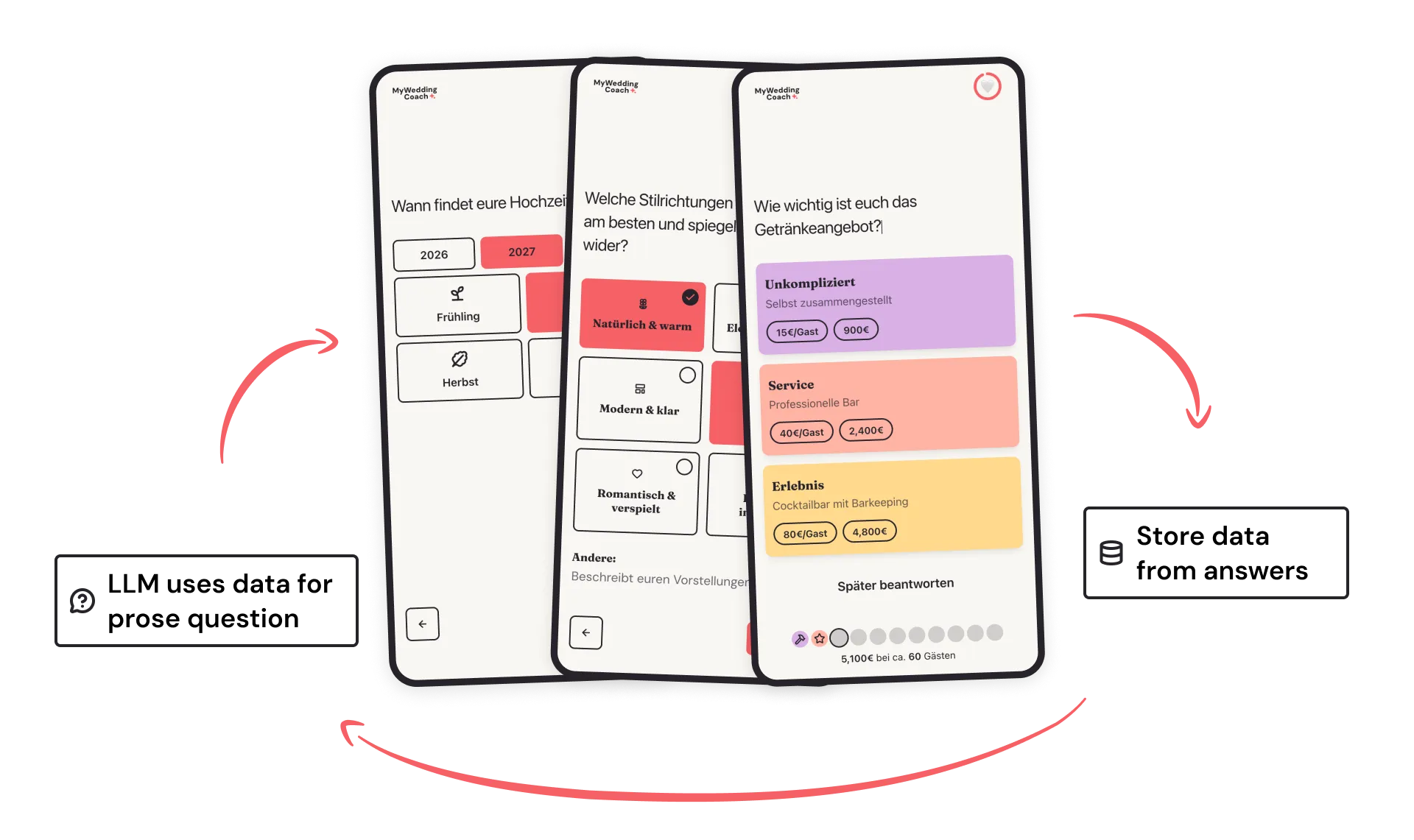
We'd been researching how other products use AI without defaulting to a chatbot. The pattern that kept working: let the product own the structure and data, use AI for the conversational layer. We rebuilt the interviewer around that idea.
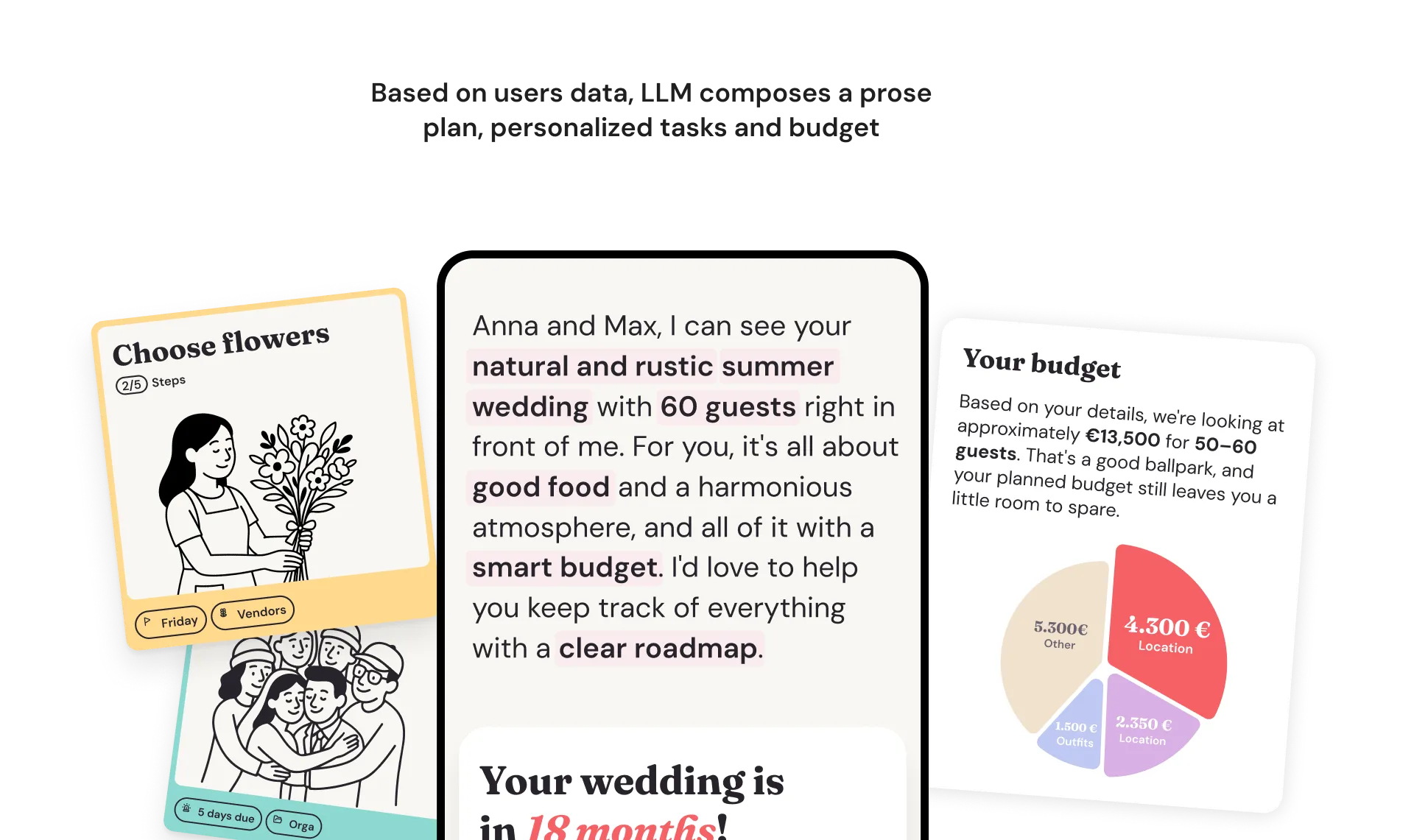
It's a guided, step-by-step flow now. The product defines each question. The AI formulates it in natural language and can reference what the couple said earlier, so it still feels like a conversation. I designed fallback defaults for when the API is slow or fails, so the flow always completes. At the end, the couple gets an AI-written summary with their top priorities and an estimated budget.
The obstacle
Nobody signed up for the waitlist. That led to serious discussions about whether to continue.
We decided to keep going as we genuinely enjoyed the work and the learning curve was still steep. We reframed the project as a side project and focused on getting it live with real users.
Post-launch, fewer people signed up than we hoped. For me that phase became about SEO and social media. Skills I wouldn't have picked up in a normal product design role.
Outcomes
We validated the product at Hochzeitstage Hamburg, one of Germany's largest wedding fairs, and through interviews with couples from r/Hochzeit. The tool solves a real problem. The open challenge is reaching more people.
Learnings
I went from designing features inside an existing product to co-building one from zero — brand, product, design system, frontend, SEO, content, marketing. Most of that was new territory.
That breadth was only possible because of how deeply I embedded AI into the way I work. Not as a shortcut, but as what closed the gap between knowing what needs to happen and actually shipping it. A four-person team doesn't cover this much ground in three months without it.
I learned what it means to own a problem end to end. When nobody signs up, that's your problem. When the SEO is broken, you fix it. When the copy doesn't land, you rewrite it. There's no handoff. That changed how I think about design work in general.